ARTICLE · · BY BOSS ROOM
The Economics of Keeping a Great Game Alive
Remakes reduce risk, revive fandom and can make enormous money. But when familiar ideas become the safest bet, what happens to the next great game?
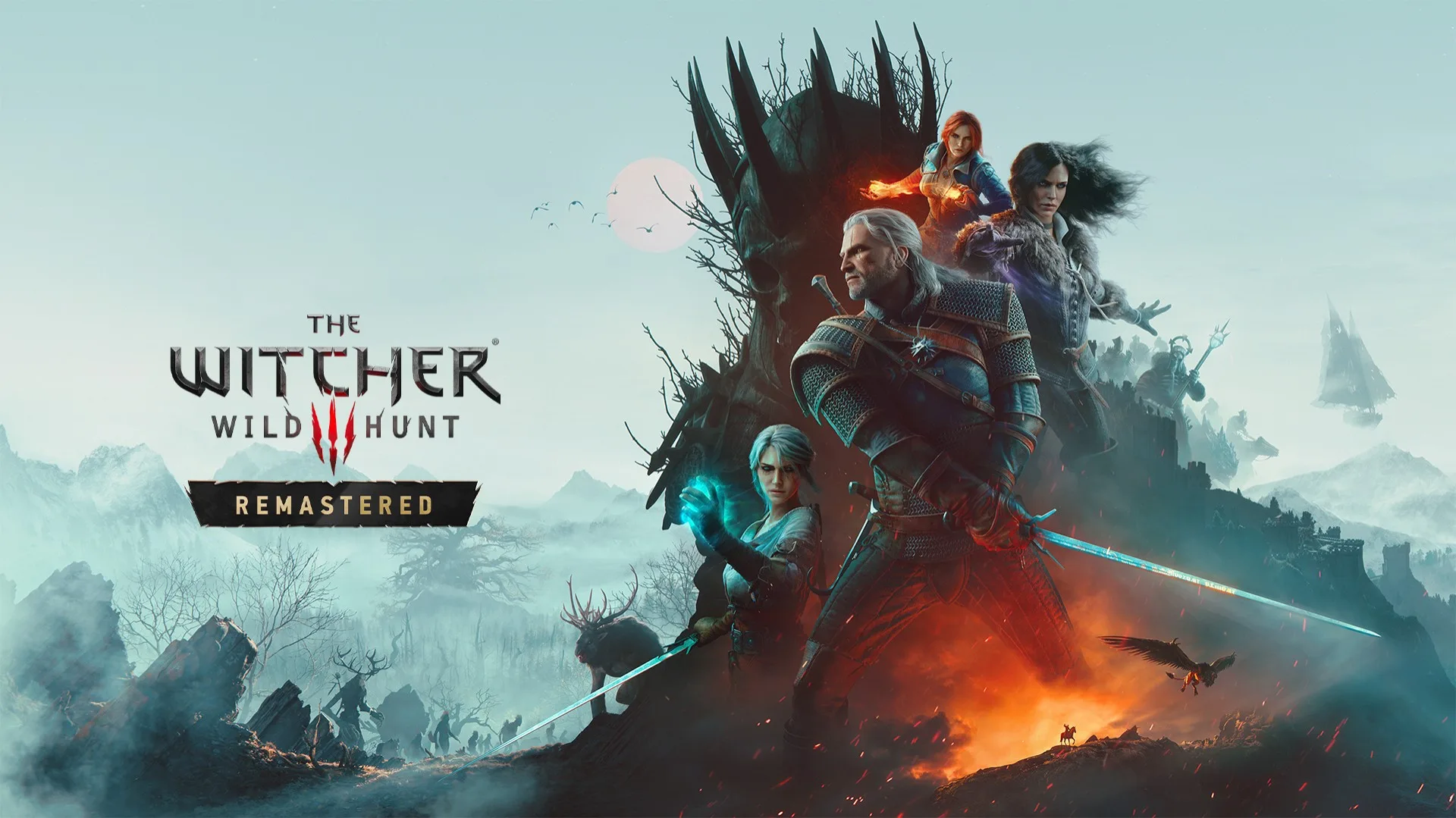
The Witcher 3 is eleven years old, has sold more than 65 million copies and should, by any normal product cycle, be settling comfortably into the history books. Instead, CD Projekt has put it at the centre of a three year publishing strategy, with Remastered arriving in 2026, Songs of the Past following in 2027 and The Witcher 4 planned for 2028.
That is not an accident. The Witcher 3 is still valuable because millions of people already know what it is, already care about its characters and already have a reason to pay attention when CD Projekt puts Geralt back on the screen. The same logic is becoming increasingly difficult to ignore across entertainment.
Creating something genuinely new means asking an audience to care about a world, character or idea they have never seen before. A remake begins with much of that work already done. The audience exists, the concept has been tested, the characters are recognised and years of sales, reviews and player behaviour have already shown a publisher what worked the first time.
That does not make a remake cheap, but it does make the business case easier to understand.
Capcom is perhaps the clearest example. Resident Evil 4 passed 10 million sales within roughly two years of its remake launching, while Resident Evil 2 has exceeded 15 million and Resident Evil 3 has passed 10 million. Capcom itself connects those results with its long term catalogue sales strategy.
When numbers like that reach a boardroom, the obvious question is not why another remake gets approved. It is why anyone would expect it not to. Disney has spent much of the past decade applying similar thinking to its animated catalogue, rebuilding familiar stories through contemporary production and selling them back to audiences who already understand the characters.
Sometimes it works spectacularly. The live action Lilo & Stitch passed US$1 billion globally in 2025, while Disney also reported that the film drove renewed streaming of the original and significant merchandise activity across the wider franchise.
Sometimes recognition is not enough.
The 2026 live action Moana opened to US$95 million globally against a reported US$250 million production budget and approximately US$120 million in marketing. Snow White had already finished its theatrical run at around US$205 million globally against a similarly reported US$250 million production budget.
That is important because nostalgia is not a guarantee. Familiarity can reduce the challenge of attracting attention, but it cannot force an audience to care. There is also a timing problem. Lilo & Stitch returned more than two decades after the original, while Moana arrived only ten years after the animated film and two years after its sequel. One has the opportunity to feel like rediscovery, while the other risks feeling like repetition.
The movie industry is not alone here either.
Music has always recycled, reinterpreted and rediscovered what came before. Covers, remixes, samples and interpolations can introduce an older song or melody to an entirely different audience, while established catalogues continue generating enormous value long after their original release.
Luminate data showed catalogue music accounted for 73.3 percent of total US music consumption in 2024, although its definition of catalogue includes anything more than 18 months old. The more useful point is not that listeners have stopped wanting new music, but that older material remains an enormous part of what people actively choose to hear.
The commercial logic is familiar. A recognisable hook has already proved that it can connect with an audience, so rebuilding it in a different context carries less uncertainty than starting with nothing.
That does not make every cover lazy, every remix cynical or every sample creatively bankrupt. Some become something genuinely different, just as the best game remakes can reinterpret an original rather than simply reproduce it.
The pattern is what matters.
“Across games, film and music, memory itself has become an asset.”
Possibly, but that explanation is too convenient on its own.
There is also a reasonable argument that companies are simply giving audiences what they repeatedly demonstrate they want.
People wanted Resident Evil 4 again, and millions bought it. Players still want The Witcher 3, so CD Projekt continues supporting it. Audiences turned out in enormous numbers for Lilo & Stitch. Older songs continue being streamed, rediscovered and rebuilt because people still respond to them.
From a commercial perspective, ignoring that demand would almost be irresponsible.
The concern begins when familiarity stops being one part of the portfolio and starts becoming the safest answer to every question. If an executive can choose between an unknown idea requiring years of audience building and a recognised property with decades of emotional equity behind it, the recognised property begins the conversation with an enormous advantage.
That is where commercial discipline can quietly become creative conservatism.
There may also be something happening on the audience side. Entertainment now competes for attention in an environment where the next game, series, song, video or notification is always seconds away. Audiences move faster, consume more and have almost limitless alternatives competing for the same hours. That does not mean people are incapable of forming new fandoms, but establishing one from scratch has arguably become harder when discovery itself is fragmented across so many platforms and experiences.
A familiar name cuts through that noise immediately. Resident Evil means something. The Witcher means something. The Lion King means something. An old melody you recognise within seconds means something. That recognition has commercial value before the new product has even had the chance to prove itself.
“The irony is that every franchise being recycled today once began as an uncertain idea.”
There was a first Resident Evil, a first Witcher and a first Final Fantasy. None arrived with decades of sales history proving that audiences would care, so someone had to take the risk.
That is why The Witcher 3 is actually an interesting place to begin this conversation rather than an obvious villain. CD Projekt is not simply charging existing players for the same game again. Remastered is being used alongside a new expansion and eventually The Witcher 4 to extend the life of something people still love while moving the franchise forward.
Keeping a great game alive is not the problem. The problem comes when keeping yesterday's successes alive becomes easier to justify than finding tomorrow's.
If every publisher keeps returning to the games, movies and songs we already love, who is taking the risk on the ones we have not fallen in love with yet?
What did you think?